


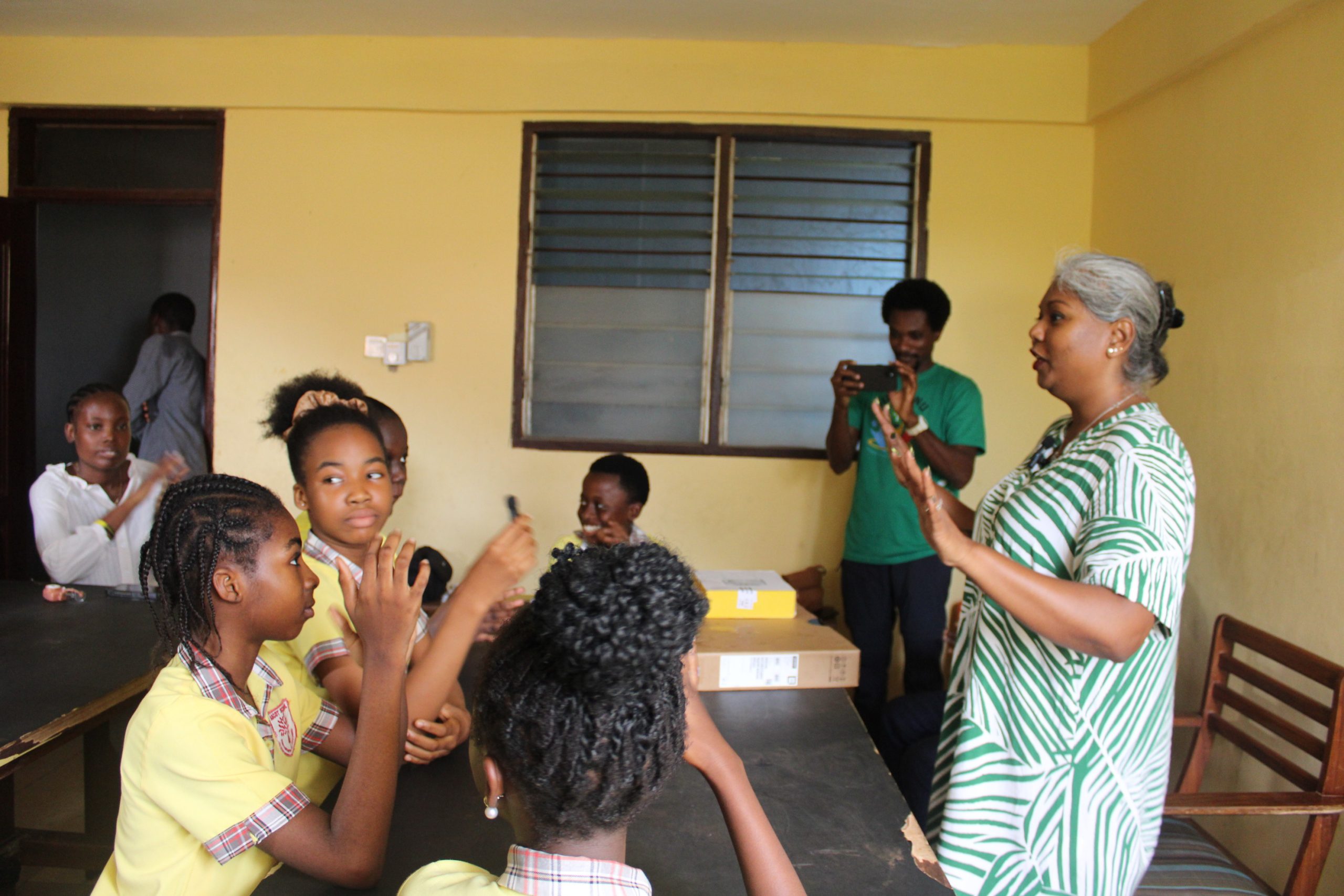
n early June, we at the Sustainable Development Alliance (SusDA) had the honour of welcoming Asmita Rajaram, the Global Coordinator of VVOB’s S-Cool Links Project, to Ghana for a two-day working visit. From June 2nd to 3rd, Asmita engaged with our team, local educators, and students involved in climate action projects under the S-Cool Links initiative.
Her visit marked a significant milestone in our partnership with VVOB as we work together to empower schools to lead grassroots climate action across Ghana.
Asmita’s time in Ghana was focused on gaining first-hand insights into the experiences of schools participating in the S-Cool Links project. She met with teachers and school leaders from:
• Ascot Preparatory School
• Madina Pentecost Preparatory School
• Future Stars Preparatory School
• Labone Senior High School
These interactions revealed both the challenges educators face and the bold aspirations they hold for their students and school communities. Teachers shared stories of climate-focused learning, community engagement, and innovative classroom projects already underway through their Suahunu Eco-Clubs—SusDA’s school-based environmental action model.
During the visit, Asmita facilitated a session encouraging teachers to fully engage with the S-Cool Links online platform, which connects educators globally to share lessons, project ideas, and peer learning. She emphasized how the platform offers:
• Up-to-date climate education resources
• Lesson plans adaptable to local contexts
• A supportive network of climate-conscious educators worldwide
• Visibility for local school projects on a global stage
Her message was clear: “Ghanaian educators have a vital role to play in shaping global conversations on climate education—and the platform is a space where their voices and innovations matter.”
One of the highlights of Asmita’s visit was witnessing students proudly present their climate projects through performances, demonstrations, and storytelling. From tree planting and waste segregation to climate-themed dramas and debates, it was clear that learners were not only informed—but deeply motivated.
These initiatives are made possible by the strategic partnership between S-Cool Links and SusDA, with direct funding support from VVOB, enabling us to provide laptops and internet devices to participating schools. This digital access is a game-changer, ensuring that schools can actively participate in the global network and showcase their contributions to climate solutions.
Asmita’s visit was more than a check-in—it was a celebration of what’s possible when local commitment meets global collaboration. It reinforced our shared belief that education is a powerful tool for climate action, and that teachers and students are already at the forefront of change.
As we move forward, SusDA remains committed to expanding the reach of the S-Cool Links Project in Ghana, deepening our support to schools, and championing student-led climate action.
Together, we’re making schools not just centres of learning—but hubs of environmental leadership.
Stay tuned for more stories, insights, and updates as the S-Cool journey unfolds across Ghana.


